Table des matières
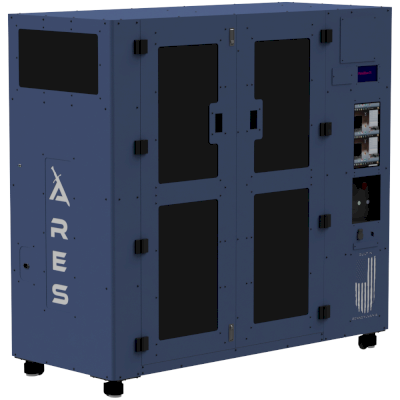
Découvrez tout sur les caractéristiques de l’imprimante 3D Proteor ARES, sa compatibilité avec OctoPrint, Mainsail, Fluidd et SimplyPrint, et la façon de configurer chacun d’eux.
Compatibilité de l’imprimante Proteor ARES
L’imprimante 3D Proteor ARES fonctionne-t-elle avec OctoPrint, Mainsail, Fluidd et SimplyPrint ?
Déterminer si votre imprimante fonctionne avec OctoPrint, Mainsail, Fluidd ou SimplyPrint peut s’avérer compliqué, surtout si vous débutez en impression 3D, car il existe des milliers d’imprimantes.
Nous sommes là pour vous faciliter un peu la tâche en répondant à la question : la Proteor ARES est-elle compatible avec OctoPrint, Mainsail, Fluidd et SimplyPrint ?


Nous nous sommes trompés ? Une de ces données est incorrecte ? Dites-le-nous !
Quel slicer utiliser pour la Proteor ARES
Find the best slicing software for your Proteor ARES 3D printer.
Compatible Slicers for Proteor ARES
At SimplyPrint we support the following 7 slicers. But, that does not mean that no other slicers are compatible with this the Proteor ARES. We are working on adding support for more slicers for our online cloud-based slicer.







No Recommended Slicers Found: To our knowledge, none of the slicers we currently track have built-in default profiles for the Proteor ARES.
However, the printer can probably still be used with these slicers—you'll just need to create your own custom profiles, for example by basing them on profiles from a similar printer model. It's also possible that this printer works best with another slicer—perhaps one made by Proteor—that we're not tracking on our website yet.
Automatic Profile Updates: Profiles are automatically checked and fetched from the slicer GitHub repositories every day, as well as from our own open-source community-driven slicer profile database. This ensures you always have access to the latest profiles.
Cloud-Based Slicer for Proteor ARES
Other Compatible Slicers
Note: Many other excellent slicing software options exist, including Cura, Simplify3D, ideaMaker, KISSlicer, and others. While we don't currently track profiles for these slicers in our database, they may work perfectly with your Proteor ARES. Check each slicer's official documentation or community forums for compatible profiles and settings. You can also contribute profiles to our open-source slicer profile database on GitHub.
What filament can the Proteor ARES print?
A guide to the materials the Proteor ARES can handle, based on its hotend and heated bed specs.
| Filament | Suitability | Notes |
|---|---|---|
| PLA | Great | The easiest filament to print. Works on almost any printer; a heated bed helps adhesion but is not required. |
| PETG | Great | Comfortably in range (PETG likes a ~230-250C hotend and a ~70-85C bed). |
| TPU & flexibles | With care | Possible, but a Bowden extruder makes flexibles harder - print slowly and prefer firmer (higher-shore) TPU. |
| ABS & ASA | Great | The high-temperature hotend and hot bed handle ABS and ASA well. An enclosure helps further on large parts. |
| Nylon (PA) | Bien | Doable with care - dry the filament thoroughly, and an enclosure helps a lot. |
| Polycarbonate (PC) | Bien | In range for PC. Dry the filament, print slowly, and use an enclosure for the best results. |
| Carbon-fiber & glass-filled | With care | Possible if you fit a hardened or wear-resistant nozzle - the abrasive fibers quickly wear a stock brass nozzle. |
Caractéristiques de l’imprimante Proteor ARES : type de plateau, dimensions, hauteur d’impression et plus encore
Découvrez les principales caractéristiques du modèle d’imprimante 3D Proteor ARES. Du type de plateau à la taille, en passant par la hauteur d’impression et plus encore, nous fournissons des spécifications détaillées pour vous aider à comprendre les capacités de l’imprimante.
| Caractéristiques | Détails |
|---|---|
| Nom du modèle d’imprimante | ARES |
| Fabricant / marque de l’imprimante | Proteor |
| Type de plateau | Rectangle |
| Taille du plateau | 850 x 450 mm |
| Hauteur d’impression max. | 925mm |
| Avec plateau chauffant | Oui |
| Température max. de l’extrudeur | 450° |
| Température max. du plateau | 120° |
| Largeur du filament | 1.75mm |
| Nombre de buses | 1 |
| Outil de palpage / nivellement automatique du plateau | Oui |
| Direct drive | Non |
| Supports serial printing | Oui |
| Shipped firmware | Marlin |
| Supported file formats | G-code (.gcode, .gco, .g) |
Nous nous sommes trompés ? Une de ces données est incorrecte ? Dites-le-nous !
Questions fréquentes
Is the Proteor ARES compatible with SimplyPrint?
Yes. You can connect the Proteor ARES to SimplyPrint via OctoPrint or Klipper (Moonraker), then slice, queue, start and monitor prints from your browser or the mobile app.
What slicer should I use for the Proteor ARES?
Cura, PrusaSlicer and OrcaSlicer all work with the Proteor ARES, and you can run any of them in SimplyPrint's online browser slicer - no install needed, on any device.
What filament can the Proteor ARES print?
Based on its specs (hotend up to 450C, heated bed up to 120C), the Proteor ARES handles PLA, PETG, ABS & ASA or Nylon (PA) well. See the full filament guide above for ABS, nylon, PC and composites.
Does the Proteor ARES work with OctoPrint or Klipper?
The Proteor ARES works with OctoPrint or Klipper (Mainsail and Fluidd), and SimplyPrint connects to it through them - so you get cloud access, a queue and camera monitoring on top.
What is the Proteor ARES's build volume?
The Proteor ARES has a build volume of about 850 x 450 x 925 mm. See the full specifications table above for bed type, temperatures and more.
Pour conclure
Nous voici à la fin de notre guide d’informations sur la Proteor ARES. Nous consacrons beaucoup de temps à rechercher et à rassembler des données sur le plus grand nombre possible d’imprimantes 3D, conscients de la difficulté à trouver des informations complètes et fiables au même endroit. Notre objectif principal est de renseigner sur la compatibilité de certaines imprimantes avec les clients d’impression 3D les plus populaires. Nous espérons que ce guide a répondu à vos questions !