AMS auto-sync, auto-assign and automatic tracking

The Bambu Lab filament manager that syncs with your AMS

Load an official Bambu spool and SimplyPrint does the rest. It reads the spool's RFID tag, creates the spool record, assigns it to the right AMS slot and keeps the AMS-calculated weight in sync both ways. Run a fleet of Bambu printers and every AMS slot lands in one live inventory.

View NFC filament tags overview Kom gratis i gang Mere info & how-to
Feature image

Your AMS and SimplyPrint, in sync

Bambu's AMS already weighs and identifies official spools by RFID. SimplyPrint connects to that, so instead of re-entering spools by hand, your inventory mirrors what's loaded in every AMS automatically - and usage keeps deducting as you print, even for third-party filament.

How AMS auto-sync works

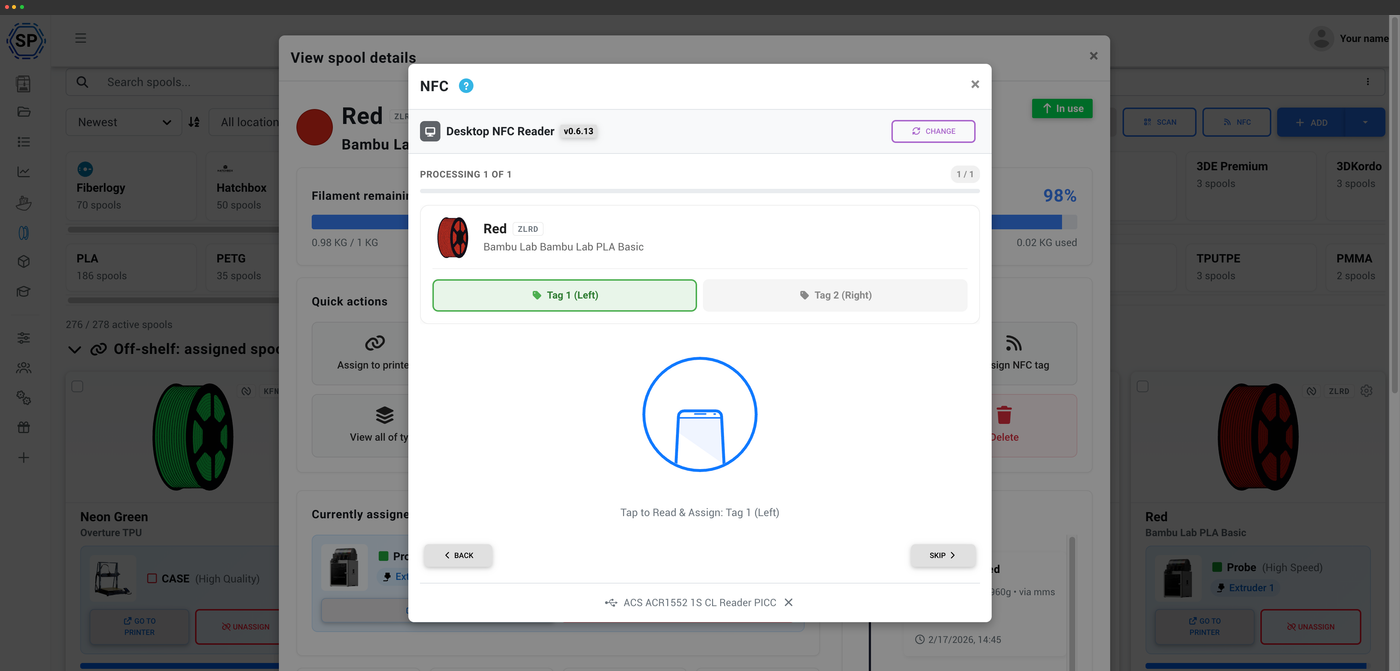
Official Bambu Lab spools carry RFID tags that the AMS reads on load. SimplyPrint picks that up and automatically creates the spool, assigns it to the AMS slot it's loaded in, and syncs the AMS-calculated weight both ways. As the AMS recalculates remaining filament, your inventory updates, and as SimplyPrint deducts usage, it stays aligned. Some Bambu spools carry two tags (one per side) - both can be linked to the same spool, so it doesn't matter which way round it goes in.

How to use SimplyPrint with your Bambu AMS

Three steps to a hands-off AMS inventory.

Connect your Bambu printer

Connect your Bambu Lab printer to SimplyPrint so it can see what's loaded in the AMS.

Load an official spool

SimplyPrint reads its RFID, auto-creates the spool and assigns it to the right AMS slot, syncing the weight both ways.

Third-party? We still track it

Third-party filament has no Bambu RFID, so the AMS can't identify it, but assign it to its slot once in SimplyPrint and we deduct usage from your prints automatically, keeping its remaining weight accurate.

Feature image

The tag data, on the spool record

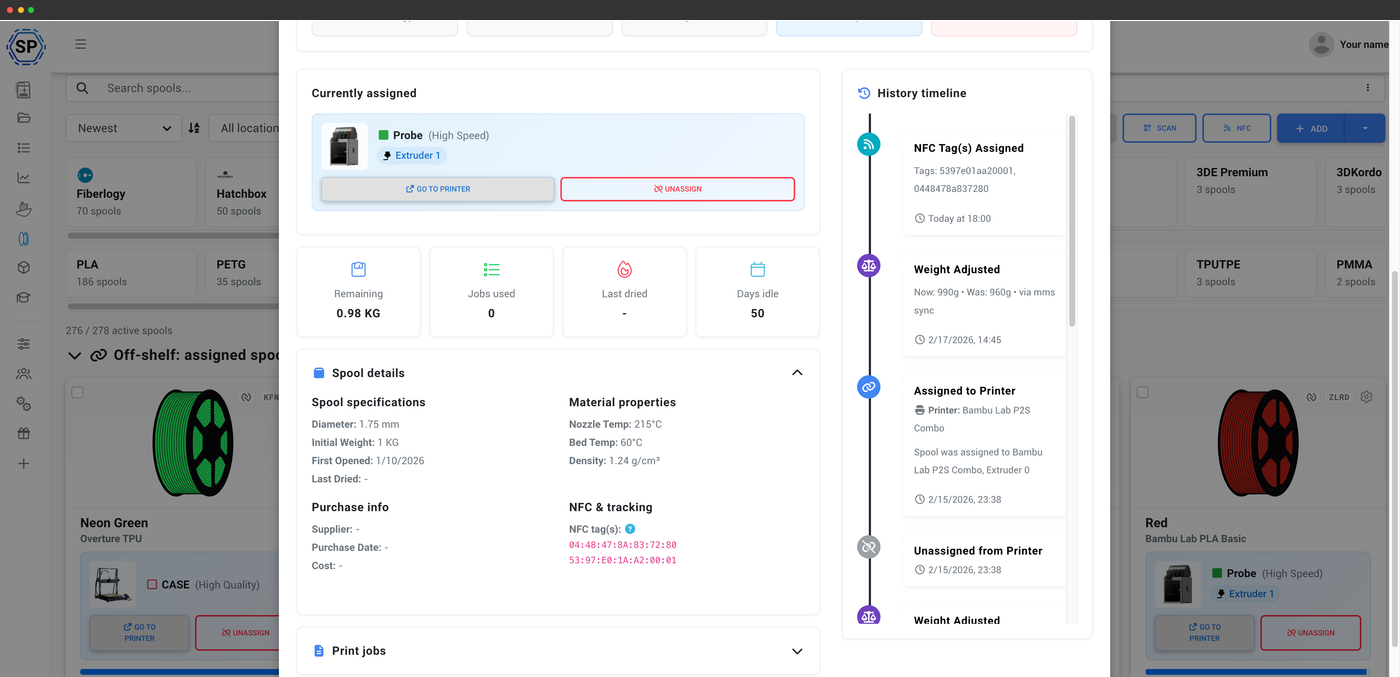
Identity, weight and history in one place

Once a tag is read, its identifier lands on the spool record alongside the material, color and remaining weight. SimplyPrint keeps a timeline of every tag assignment and weight adjustment, so you can see exactly when a spool was identified and how its remaining weight has changed since.

AMS auto-create and weight sync, live

Official Bambu spools show up automatically and stay in sync as the AMS reports remaining weight.

Filament inventory 0 synced
Jade White Auto-created
Bambu Lab · PLA Basic AMS slot 1
0 g synced
Lime Green Auto-created
Bambu Lab · PETG HF AMS slot 2
0 g synced
Charcoal Auto-created
Bambu Lab · PLA Matte AMS slot 3
0 g synced
Bambu Red Auto-created
Bambu Lab · ABS AMS slot 4
0 g synced
Official Bambu Lab spools are created and assigned automatically, then the remaining weight stays in sync.

Third-party filament in the AMS

Running cheaper or specialty filament in your AMS? Third-party spools have no Bambu RFID, so the AMS itself can't recognize them, and there's no tag you can write that it would trust. SimplyPrint fills that gap: assign the spool to its slot once, and we deduct usage automatically from the G-code of every print, so its remaining weight stays accurate on your side even though the AMS leaves it unknown.

Every AMS slot, one inventory

With several Bambu printers and AMS units, knowing what color is where becomes a real chore. SimplyPrint rolls every AMS slot across every printer into a single live inventory you can search, group and filter - so you can see at a glance which printer is loaded with the PETG you need before you queue a job.

Bambu Lab AMS multi-material

Usage deducted automatically

Whether a spool is auto-synced from the AMS or assigned by hand, SimplyPrint deducts filament as you print. We analyze the G-code, convert it to grams and subtract it from the right slot's spool when the print ends - so your AMS inventory tells you how much is actually left, not what it weighed when you opened it.

How automatic tracking works

Read and auto-sync, not writing

SimplyPrint reads Bambu Lab RFID tags and auto-syncs them, but it does not write them - Bambu has no official write spec, so no platform can safely re-encode a Bambu tag. If you want to write your own NFC tags to spools, use an open standard like Prusa OpenPrintTag or OpenSpool, or write Creality CFS tags. Bambu spools stay read-and-sync only.

Standards you can write

Plan access: what's included?

Reading and auto-syncing Bambu AMS spools comes with the filament manager on every plan. Writing tags for other standards uses a monthly NFC-write allowance.

Feature / Limit Free Basic Pro Print Farm Enterprise School Cloud Slicer Filament Manager
Filament manager
Spool records, AMS auto-sync and automatic usage deduction, on every plan including Free.
NFC tag writes per month
How many NFC tags you can write to spools each month (for writable standards).
10 30 100 10

Want to learn more about our plans?

View full pricing & feature comparison

Frequently asked questions

Connect your Bambu printer, then load official spools and SimplyPrint auto-creates and assigns them from the AMS RFID, syncing weight both ways. For third-party filament with no tag, assign it to the slot once and it's tracked automatically.
Yes. For official Bambu spools, SimplyPrint auto-creates the spool, assigns it to the AMS slot it's loaded in, and syncs the AMS-calculated weight both ways. You don't add them by hand.
No. Bambu has no official write spec, so SimplyPrint reads and auto-syncs Bambu tags but doesn't write them. To write your own tags, use an open standard like OpenPrintTag or OpenSpool, or write Creality CFS tags.
The AMS can't identify third-party spools, and there's no Bambu tag you can write that it would trust. But assign the spool to its slot once in SimplyPrint and we deduct usage from your prints automatically, so its remaining weight stays accurate on your side even though the AMS shows it as unknown.
No. Some Bambu spools carry one tag per side. Both can be linked to the same spool, so it's recognized whichever way round it loads.
Yes. Every AMS slot across every connected Bambu printer rolls into one searchable, groupable inventory.

Table of Contents